Ex-Military CAT D7G Dozer for Sale: What US Buyers Should Know Before Buying
A new crawler dozer can cost more than a small contractor makes in a good year. That is why many buyers start looking at an ex-military CAT D7G for sale instead. The machine is proven, the price is far lower, and the hour meter sometimes shows surprisingly little use.
But a low gauge number doesn’t tell the whole story. Buyers who skip the homework often end up paying for repairs they didn’t plan on. This guide covers what “ex-military” means, who buys these dozers, what to check, and how the price compares with new.
What Does “Ex-Military” Mean on a Used CAT D7G?
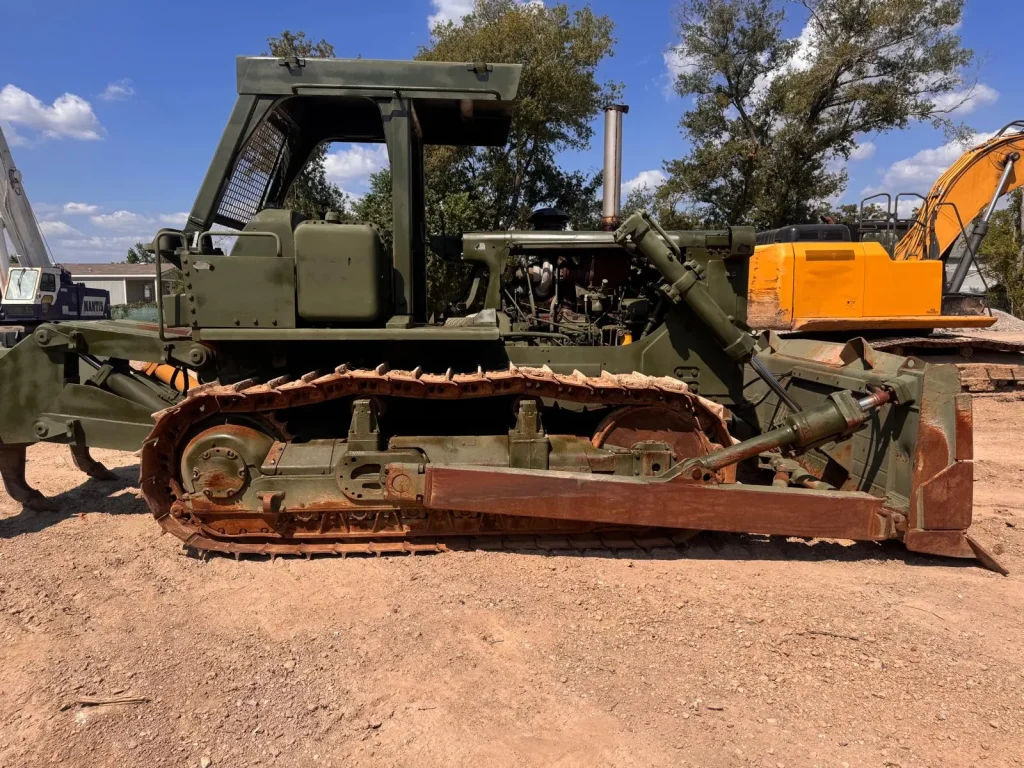
It means the machine was owned by a military branch, such as the US Army, before being sold off. It does not always mean the dozer was built to military specs. Many of these were standard Caterpillar D7G dozers bought for base construction, road building and site work.
Government-owned machines often show low displayed hours. They were used for specific jobs, then parked between projects. Storage and maintenance records matter just as much as the hour meter, because a machine that sat outside for years can wear in ways the hours don’t show.
Who Buys a Military Surplus Bulldozer, and What Do They Use It For?
Most buyers of a military surplus bulldozer are small to mid-size businesses that need real pushing power without a new-machine payment. Typical buyers include:
- Land clearing and excavation contractors preparing lots and building pads
- Farmers and ranchers building roads, ponds and terraces
- Oilfield and pipeline crews cutting access roads and well pads
- Quarry, landfill and mining operators who need a dozer for spreading and pushing material
- Rental yards and resellers adding dependable machines to their fleet
- Export buyers looking for older, simple machines that are easy to repair
The D7G suits this work well. It is a mid-size crawler with a mechanical design that most diesel mechanics can service. That keeps repair costs lower than on newer machines packed with electronics.
Military Surplus vs. Conventional Used CAT D7G
The two types are closer than most people think. The difference is mostly in history.
| Factor | Ex-military / government surplus | Conventional used D7G |
| Previous owner | Government agency | Contractor, farm or fleet |
| Hours | Often lower | Usually higher |
| Storage | Often indoors or in yards between jobs | Mixed, depends on owner |
| Records | Sometimes available | Varies widely |
| Wear | Depends on how it was used | Depends on how it was used |
The takeaway is simple. Ownership history is a starting point, not a guarantee. A well-kept private machine can beat a neglected government one, and the reverse is also true.
Used CAT D7G vs. New Dozer: Where the Price Difference Shows Up
A new dozer in this size class runs well into the hundreds of thousands of dollars, and that’s before delivery and attachments. A used CAT D7G for sale typically costs a fraction of that. The D7G is also no longer in production, so you are buying proven, older technology, not a prototype.
The trade-offs are real, though. Used machines come with wear, no factory warranty and a parts search that sometimes takes longer. For many buyers, the savings still win, especially on jobs where the dozer works a few hundred hours a year. For exact new-machine pricing, check current Caterpillar dealer quotes.
What to Inspect Before Buying an Ex-Military CAT D7G
Whether you do it yourself, send your mechanic or hire a third party, this is the checklist that matters.
Check the Hour Meter and Serial Number
Ask whether the displayed hours match the machine’s condition. Look at pedals, seat, controls and paint wear. Confirm the serial number against ownership paperwork.
Look at the Undercarriage
Undercarriage is the biggest wear cost on any dozer. Check track links, rollers, idlers, sprockets and shoes. A machine with real low hours should have undercarriage that looks like it.
Engine and Cooling System
Look for leaks, hard starting, heavy smoke and signs of overheating. Ask about oil changes and coolant condition.
Transmission and Steering
Run the machine through its gears. Listen for noise, and check that steering clutches and brakes respond evenly.
Hydraulics
Check hoses, cylinders and seals for leaks. Blade lift and tilt should move smoothly.
Blade, Ripper and Mounting Points
Look for cracks, bent parts and worn cutting edges. Weld repairs near mounting points deserve a closer look.
Rust and Storage Damage
Machines stored outdoors may show corrosion on wiring, fuel lines and hoses, even with low hours.
CAT D7G with Three-Shank Ripper: Why It Matters
A CAT D7G with ripper does more than push dirt. The rear ripper breaks up hard-packed soil, caliche, shale and rocky ground so the blade can move it afterward. A three-shank setup gives wider coverage in one pass, which saves time on large sites.
When inspecting one, check the shanks, tips and pins for wear, and look closely at the mounting brackets and any hydraulic parts that raise and lower the ripper. A worn ripper is a fixable cost, but you want to know before you buy.
CAT D7G Specifications: What to Verify
The Caterpillar D7G specifications vary by year and configuration. In general, the D7G uses a turbocharged Cat diesel engine in roughly the 200 horsepower range and a powershift transmission. Operating weight depends on the blade, ripper and cab or ROPS setup.
Don’t rely on a general number. Confirm the details for the specific machine using the serial number and Caterpillar’s own documentation.
Is an Ex-Military CAT D7G a Good Buy?
It can be, if the numbers work. Think through these points:
- Price vs. condition. A low asking price means little if the undercarriage is worn out.
- Hours vs. wear. A low hour CAT D7G is attractive, but only if the machine looks and runs the part.
- Records. Maintenance history adds confidence.
- Parts and service. The D7G is old, but parts are still widely available in the US.
- Your work. Heavy daily production may call for a newer machine. Seasonal clearing and site prep suit the D7G well.
- Transport and repairs. A dozer this size needs a lowboy trailer, so factor in delivery.
1987 CAT D7G Ex-Army Dozer Available at Mico Equipment
Here is a machine that fits the profile:
- Manufacturer: Caterpillar
- Model: D7G
- Year: 1987
- Displayed hours: 181
- Condition: Used, ex-Army
- Operator station: Open ROPS
- Attachment: Rear ripper with three shanks
- Location: Houston, Texas
You can view the full listing here: 1987 CAT D7G for sale. Contact Mico Equipment for current pricing, more photos and details. Machines are sold as they came to us, and buyers who want an inspection can request one.
Know the Machine, Not Just the Hours
An ex-military D7G can be a smart buy for the right job. It costs far less than new, it’s simple to repair, and it still moves a lot of ground. Look past the hour meter. Check the undercarriage, the records, the ripper and the price, then decide.
Ready to look at one? Browse the ex-military CAT D7G for sale at Mico Equipment, or contact the team to ask about the Houston machine today.
Frequently Asked Questions
What is an ex-military CAT D7G bulldozer?
It is a Caterpillar D7G that was previously owned and used by a military branch, then sold as surplus. Many were standard models used for construction work on bases.
Is a military surplus CAT D7G better than a regular used D7G?
Not automatically. Condition, maintenance and actual wear matter more than who owned it.
Does a low-hour CAT D7G mean less wear?
Usually, but not always. Long storage, rust and poor upkeep can cause problems even when hours are low.
Where can I find a CAT D7G for sale in Texas?
Mico Equipment lists used crawler dozers in Houston, Texas, including a 1987 ex-Army D7G with a three-shank ripper.