CAT D7 vs D8 vs D9: Which Dozer Is Right for Your Job?
Picking between a Cat D7, Cat D8 and Cat D9 comes down to one question: how much dirt, rock or brush do you need to move, and how fast? Go too small and the job drags. Go too big and you pay for power that sits idle, plus higher freight and undercarriage bills. This guide breaks down CAT D7 vs D8 vs D9 in plain terms, shows who buys each one, and explains why many contractors look at a used Cat dozer before they look at a new one.
Cat D7 vs D8 vs D9: What’s the Difference?
The main difference is dozer size. As you move from the D7 to the D8 to the D9, dozer horsepower, operating weight and blade capacity all go up, and so does the work each machine can handle.
| Model | Engine | Net horsepower | Operating weight | SU blade capacity |
| Cat D7 | Cat C9.3B | 265 hp | 65,644 lb | 10 yd³ |
| Cat D8 | Cat C15 | 363 hp | about 87,000 lb | 13.5 yd³ |
| Cat D9 | Cat C18 | 452 hp | 110,225 lb | 17.8 yd³ |
When it comes to clothing, size does count more than you might realize. A heavier dozer will be pushing further on each pass and will be more stable in difficult material due to its increased weight. The important thing is the cost. Heavy-duty machines require the heaviest trailers, consume more fuel and require more to keep in motion on the tracks. The same applies to the size of the blade. The larger SU blade is larger per pass but only if the engine and tracks will produce the capability.
Choosing the Right Caterpillar Dozer for Your Jobsite
Start with the work, not the model
Before comparing the spec sheets, ask three questions: What type of material are you pushing, how far are you pushing it, and how hard is the ground? The answers are related to a sizing class faster than any brochure.
- Construction work, excavation, site preparation, grading, mixed work: Cat D7
- High-density excavation, roads, large developments: Cat D8
- Heavy work, such as pushing, ripping, etc. in rock, quarries, or mines: Cat D9.
Have a separate trailer if you need one
The D7 weighs about 65,600 lb. The D9 is approximately 110,000 lb (blade & ripper). That gap becomes apparent in the permits, how much it costs to haul, and which job sites you can access. A smaller dozer can reap real savings when machines are relocated between jobs periodically throughout the week.
Cat D7: Versatile Production and Site-Preparation Dozer
The D7 dozer, also referred to as the Cat D7 dozer, D7 crawler dozer or a bulldozer, is the smallest of the three. The current model can transport up to 11% more material per hour, while the newer D7R model is lighter and has structures of D8 size.
The D7 blade capacity is approximately 10 yd³ for D7 SU and approximately 8 yd³ for the straight blade. It is suitable for D7 site preparation, D7 grading, D7 land clearing as well as general D7 earthmoving services. The D7 LGP version distributes weight over longer and wider tracks for soft and wet soils, while the D7 ripper (three shanks) is suitable for moderately hard soils. Look for ground pressure issues for your D7 undercarriage.
Who buys it: It’s purchased by site-work contractors, utility and pipeline crews, land developers and landowners who are clearing property. Many times, the second “real” D7 production dozer a growing contractor purchases.
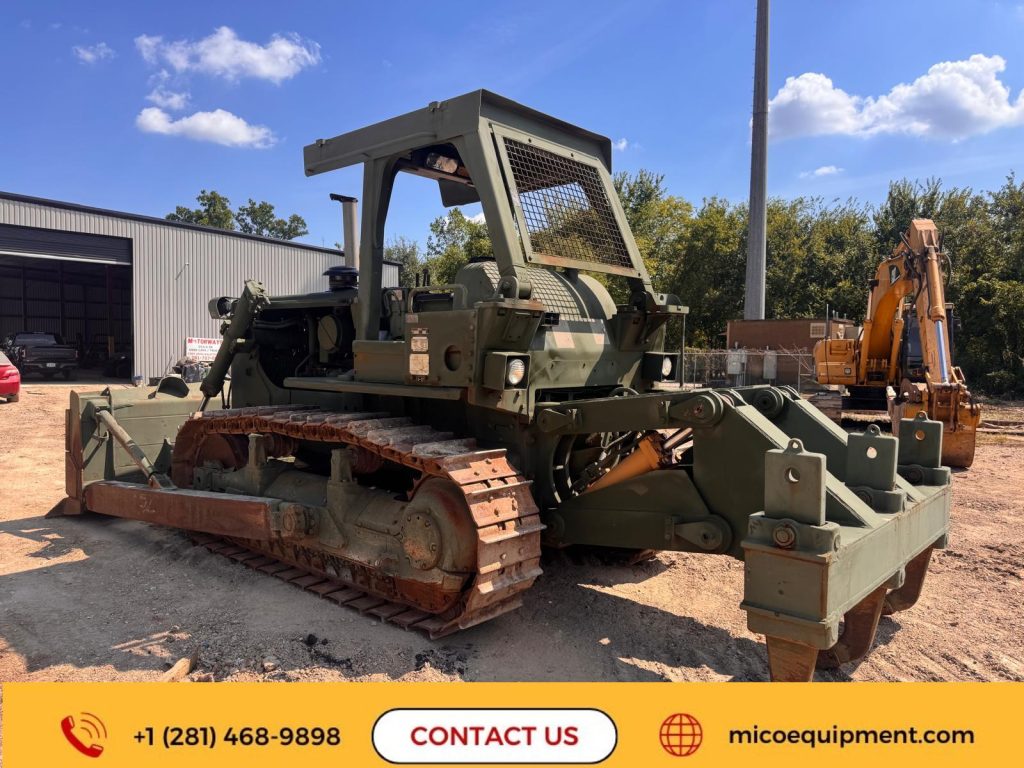
Cat D8: Heavy Earthmoving and Production Dozer
The Cat D8 dozer (Cat D8 crawler dozer or Cat D8 bulldozer) elevates the standards for the Cat C15 engine at 363 hp. The holding capacity for the D8 SU blade is approximately 13.5 yd³, and approximately 12.9 yd³ for the D8 LGP blade. The current D8 provides up to 33% more dozing productivity than the one that it replaced while consuming no more fuel aboard.
This is the heavy production dozer machine used in D8 mass excavation, D8 road construction and D8 infrastructure construction. It is more powerful than a D7 in medium-hard soil with the D8 ripper, and the D8 production capacity is sustained on long pushes. Also offers D8 earth moving and D8 site preparation on major sites.
Who buys it: Typical purchasers are: highway and road contractors, large site developers, landfill site operators and mining support fleets. About 27.7 yd³ of a very large landfill blade is available for light, bulky material. Before purchasing, see the D8 undercarriage and D8 ground pressure for your soil.
Cat D9: Large Dozer for Heavy Production and Ripping
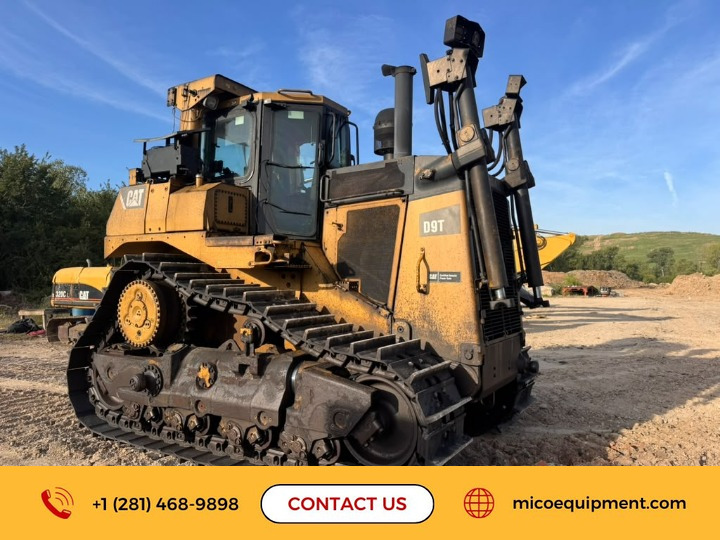
The Cat D9 dozer (D9 crawler dozer, D9 bulldozer) runs a Cat C18 at about 452 hp and has a D9 operating weight of 110,225 lb with SU blade and single-shank ripper. The D9 blade capacity is 17.8 yd³ on the SU blade and 21.7 yd³ on the U blade.
The D9 single-shank ripper puts all its force on one tooth, which is what you want for D9 rock ripping. Cat lists ripping overburden, production dozing, stockpiling and winching as core jobs, which is why this D9 heavy dozer shows up in D9 quarry work and D9 mining. It’s built for heavy material pushing and acts as a true high-production dozer and D9 production dozer where a D8 would run out of power. It also covers large-scale D9 earthmoving.
Who buys it: quarry and aggregate producers, heavy construction firms, landfills, bulk-material yards and forestry operations. Many used units on the market are older D9T or D9R models, so check the D9 undercarriage and D9 ground pressure closely.
Choosing the Right Blade and Ripper Configuration
The model is only half the decision. The setup matters just as much.
- SU (semi-universal) blade: the all-round production blade, standard on all three.
- S (straight) blade: smaller, better for dense material and finish work.
- U and landfill blades: large capacity for light, bulky material.
- LGP: wider tracks for soft ground.
- Single-shank ripper: maximum force for hard rock.
- Multi-shank ripper: better for loosening wider areas of moderate ground.
Used Cat D7, D8 or D9 Price?
Cat dealers list new D7, D8 and D9 machines as “call for price,” so there’s no public sticker number to compare against. Used Cat dozer prices are easier to track. A 2026 used-dozer pricing guide shows these ranges for good-condition machines with average hours:
| Model | 3 years old | 5 years old | 8+ years old |
| Used Cat D7 (D7E / D7R) | $280,000 to $340,000 | $215,000 to $265,000 | $138,000 to $182,000 |
| Used Cat D8 (D8T) | $380,000 to $460,000 | $290,000 to $358,000 | $185,000 to $248,000 |
Parts, tools, and equipment prices for used Cat D9 models vary more. New dealer fair prices in the United States on CFU are in the range of approximately $197,000 for a 2008 D9R with approximately 29,000 hours to in excess of $1 million for a low-hour 2018 D9T. These prices are being asked, not sold.
Why buyers choose used over new
- Lower upfront cost. First years of depreciation already passed.
- Faster availability. Lots of used supplies are available, not in a build schedule.
- Proven platform. For years, older models have been covered by both Cat parts and dealer support.
- Hours are more important than age. An older machine with a low number of hours can defeat a newer machine that had more hours of work.
Most used machines are “as is, which means that the buyer inspects the machines to determine if they meet their requirements before purchasing, including checking hours, service records, and undercarriage wear. Inspections are available upon request.
D7 vs D8 vs D9: Which Dozer Should You Buy?
Choose the smallest machine that will do the most difficult job without difficulty. If the machine is to be used for most grading and land clearing applications, the Cat D7 will suffice. The Cat D8 is well worth its heft for long-haul travels on the road or for heavy development work. When you’re pounding rock or kicking dirt throughout the day in a quarry or mine, the Cat D9 is going to be a lot of help. Next, include a comparison of the blade and ripper, the condition of the undercarriage, and include the delivered price (not the machine price).
Match the Dozer to the Dirt
The right dozer is not necessarily the largest that you can afford. It’s the one that suits your content, your hauling distance, and your jobsite. If you are looking to compare the Cat D7, D8 or Cat D9, match the size with the jobs, not with the new vs. used scenarios. Ready to look? Explore used Cat dozers on sale at Mico Equipment, USA’s supplier of heavy equipment since 2008.
FAQ’s
What is the difference between a Cat D7, D8 and D9?
Size and capability. The D7 (265 hp, about 65,600 lb) handles site preparation and general production. The D8 (363 hp, about 87,000 lb) suits mass excavation and roads. The D9 (about 452 hp, 110,225 lb) is built for rock ripping, quarries and mining.
Which Cat dozer is best for land clearing?
Most land clearing jobs suit a D7 or D8. The D7 is easier to haul and cheaper to run. The D8 adds power for big stumps and long pushes. A D9 is usually more than clearing needs.
How much does a used Cat D7 cost?
For good-condition used Cat D7 machines (D7E/D7R), about $138,000 to $182,000 at 8+ years, $215,000 to $265,000 at five years, and $280,000 to $340,000 at three years.
What does SU mean on a Cat dozer blade?
SU means semi-universal. It’s a general-purpose production blade, larger than a straight blade, and it’s standard on the D7, D8 and D9.