Why Is Your Motor Grader Not Cutting Grade Correctly? 9 Common Problems & Fixes
You set the blade, do a pass and the road still isn’t looking right. Many county roads, job sites and farm lanes complain of a motor grader not cutting grade. It is typically one of a few causes: the setting of the blade, the rate the vehicle is moving, the shape of the road, or machine condition.
The following provides information about nine frequent issues and, then, the first place to check. It is based on information in the FHWA Gravel Roads Maintenance and Design Manual and from manufacturers (Caterpillar and John Deere).
1. Blade Bounce Is Leaving Washboards Behind
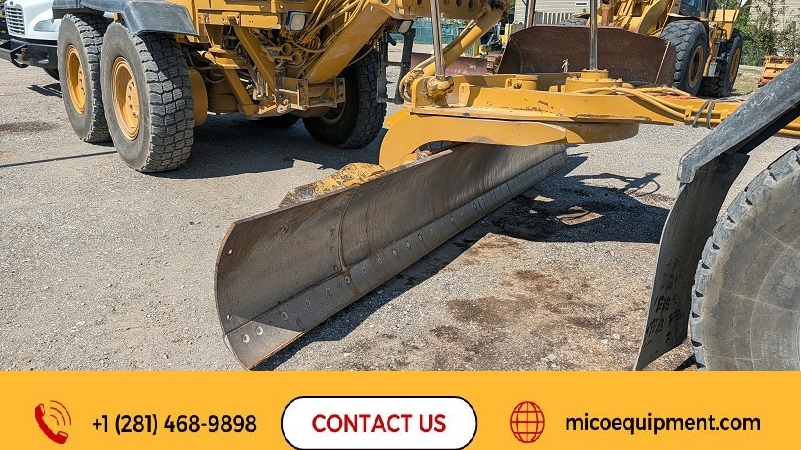
Grader blade bounce is probably the most frustrating one. The blade skips across the surface and leaves ripples, called washboards. Then you go back and fix it, which means more fuel and more hours.
Try changing your travel speed first. Bounce often shows up at one specific speed, and a small adjustment can stop it. Check tire pressure and look for worn blade-rail or circle bushings too. An older USDOT road manual also points out that the blade angle itself can make a blade bounce.
Some newer machines handle this for you. Cat’s Stable Blade system, offered on M Series 3 graders and as a retrofit on some older M Series models, senses bounce and adjusts machine speed automatically.
2. The Grader Won’t Hold the Desired Grade
If you can’t hold grade, look at the basics before blaming the operator. Worn cutting edges, loose bushings, and sensors that haven’t been calibrated all cause drift.
Machines with grade control help a lot. Cat offers Cat GRADE with Cross Slope, and John Deere offers SmartGrade, a mastless system that holds accuracy while the operator still controls articulation, pitch, and wheel lean. Even with these systems, they need regular calibration to work properly.
3. Material Is Rolling Off the Moldboard Incorrectly
Material needs to roll freely down the moldboard and off where you desire it to go! The common causes for spilling the wrong way or the blade stacking are the blade angle, blade pitch, or speed.
Good gravel road work begins, according to the FHWA manual, with the moldboard angle being one of the primary factors. It also refers to the blade pitch from a highly aggressive cutting position to a more general maintenance position. Stop and bend slightly and repeat. Avoid using the same configuration on a repeated basis.
4. The Grader Struggles on Slopes
If working on a side slope, use wheel lean. The operators typically do that manually and, according to Deere’s patent filing, it requires a degree of skill to do it well when slope banking. First, look to lean, articulation and tires if the machine is going downhill.
5. The Front Wheels Keep Sliding
Sliding front wheels usually mean a loose surface, a heavy cut, or not enough traction at the front. An all-wheel-drive motor grader can help here. Case describes its hydrostatic AWD as sensing a slipping front tire and moving power to the one that’s gripping. Cat and Deere both offer AWD options as well.
6. The Road Crown Is Uneven
Water drains off a good road crown. It is contained in a flat or inverted one and this’s where you see some of the ruts and potholes germinating. The FHWA guidance is recommended at about 1/2” of crown per foot or approximately 4 per cent. Excessive crown may look shaky on snow or icy roads. However, a simple crown gauge will inform you about the amount of crown you have, not what you’re assuming you do have.
7. Ditches Are Not Being Cut to the Correct Profile
The FHWA manual has separate sections on ditches and high shoulders because drainage drives the whole road’s condition. If your ditch cutting looks off, check blade angle, cutting-edge wear, and whether you’re using cross-slope control or at least a slope indicator.
8. The Grader Requires Too Many Passes
Extra passes are a symptom. Bounce, wrong angle, a dull edge, or poor grade control all add them. Cat says automated cross slope can save material in some applications, up to 40% by its own estimate. Treat that as a manufacturer figure, but the point holds: fewer corrections mean fewer passes.
9. The Machine Lacks Traction in Difficult Material
Mud, wet clay, loose gravel, and snow all test a grader. Cat’s AWD option is aimed at rough terrain and poor underfoot conditions. Deere offers AWD as an option and includes a no-spin differential as standard. Ballast, tire condition, and tire pressure matter too.
When the Problem Is the Machine Rather Than the Operator
Sometimes you do everything right and the grader still won’t cooperate. The FHWA manual includes a walk-around grader inspection for this reason. Look at:
- Cutting edges and moldboard wear
- Circle and blade-rail bushings
- Tire wear and pressure
- Grade control sensors and calibration
- AWD or differential function
If the machine is simply worn out, repairs can cost more than the machine is worth. That’s when many buyers look at a used motor grader for sale instead.
Where Used Graders Get Put to Work (and Who Buys Them)
Used graders are common in a few places:
- County and township road departments
- Gravel road contractors
- Site-prep and excavation companies
- Mining and quarry operations
- Farms and ranches with long private roads
Most of these buyers want a working machine at a lower cost, without waiting on new equipment delivery.
Used vs. New Motor Graders: What Changes
New graders are available equipped with the latest technology and with a full warranty but are very expensive. The older the motor grader, the lower the price of a used Caterpillar motor grader, and if your crew is performing standard gravel and ditch applications, then an older grader with less advanced grade control may get the job done.
There is some sacrifice because older machines might exhibit wear. This is the reason why buyers should find out what the machine’s condition and history are before purchasing.
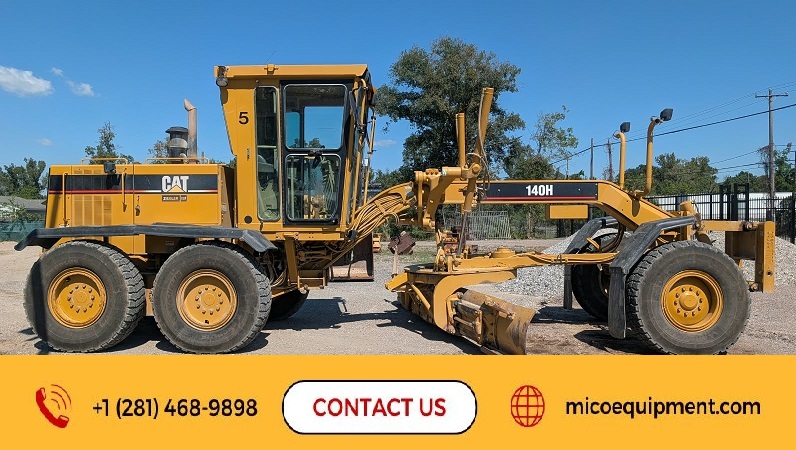
Looking at a Used Caterpillar 140H?
The Caterpillar 140H is a well-known model on U.S. road crews, and Mico Equipment has a list of motor graders for sale. Mico has supplied heavy equipment in the U.S. since 2008. The machines are sold as received and described as being in good condition. Buyers who want a closer look can request an inspection, and Mico can arrange one on request.
Fix the Setup, Then Check the Machine
The vast majority of grade issues begin with setup and the technique, and finish with wear. Go through the list top to bottom and most will be picked up. If the machine is a problem, please visit our used motor graders for sale at Mico Equipment or give the team a call to request more information about the Caterpillar 140H.
FAQs
Why is my motor grader leaving washboard?
Usually speed, blade angle, tire pressure, or worn bushings. Try a small speed change first.
What causes a grader blade to bounce?
Travel speed, hard surfaces, blade setup, and worn components. Some Cat models have Stable Blade to correct it automatically.
How much crown should a gravel road have?
About 1/2 inch per foot, roughly 4 percent, according to a summary of FHWA guidance.
Is it better to buy a used motor grader?
For many road and site crews, yes, because of the lower cost. Know the machine’s condition first.