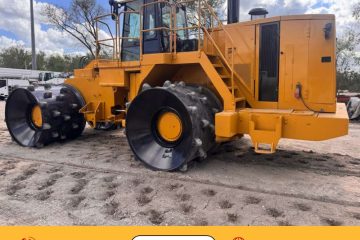
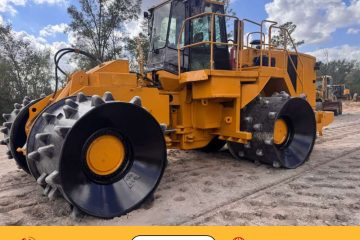
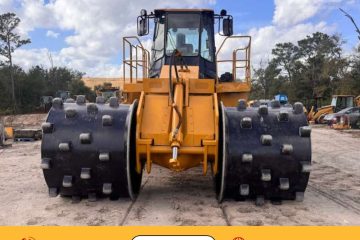
20 Things You Must Inspect in Used 2001 CAT 836G

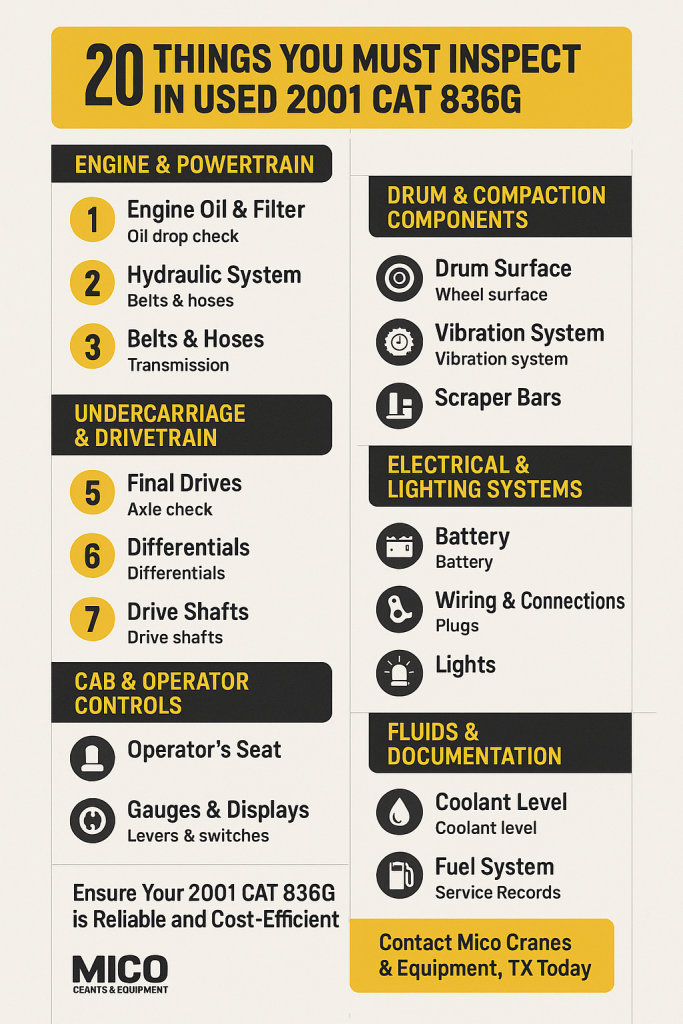
Buying a used CAT 836G landfill compactor is a cost-effective choice. They are exposed to corrosive liquids and extreme operating conditions. Therefore, to make this investment safe and long-lasting, you need a careful, systematic inspection of the selected unit. Here we enlist 20 things you must inspect in a used 2001 CAT 836G to prevent costly future repairs.
Mico Cranes and Equipment, TX, offers you an 836G compactor with a CAT-certified rebuild engine, transmission, and hydraulic system for reliable performance. This model is a professional’s trusted design for durability and exceptional compaction power. Moreover, CAT’s easy access to spare parts and customer support makes its operational cost much lower. This guide provides a comprehensive review of the 836G checkpoints to help you make a wise purchase.
What Makes the 2001 CAT 836G Unique
This model is factory-designed to facilitate landfill operators and waste management contractors. The 2001 CAT 836G landfill compactor for sale is the economical option for high-density compaction over extended hours.
- These G-series compactors are equipped with CAT 3408E engines to generate optimal torque and a strong pushing force.
- Its robust chassis and heavy-duty wheel design deliver consistent compaction for day-long operation.
- With regular maintenance, 836G stay reliable even after 18,000–25,000 hours of use without major mechanical stress.
Landfill cells require uniform compaction to prevent air from being trapped in waste layers. Moreover, these compactors must navigate uneven terrain and corrosive leachate. Always select the unit in good working order with a well-documented history of rebuild. The goal of this exploration is to go beyond price tags. We focus on inspecting the 836 G’s crucial parts that affect its real-world performance.
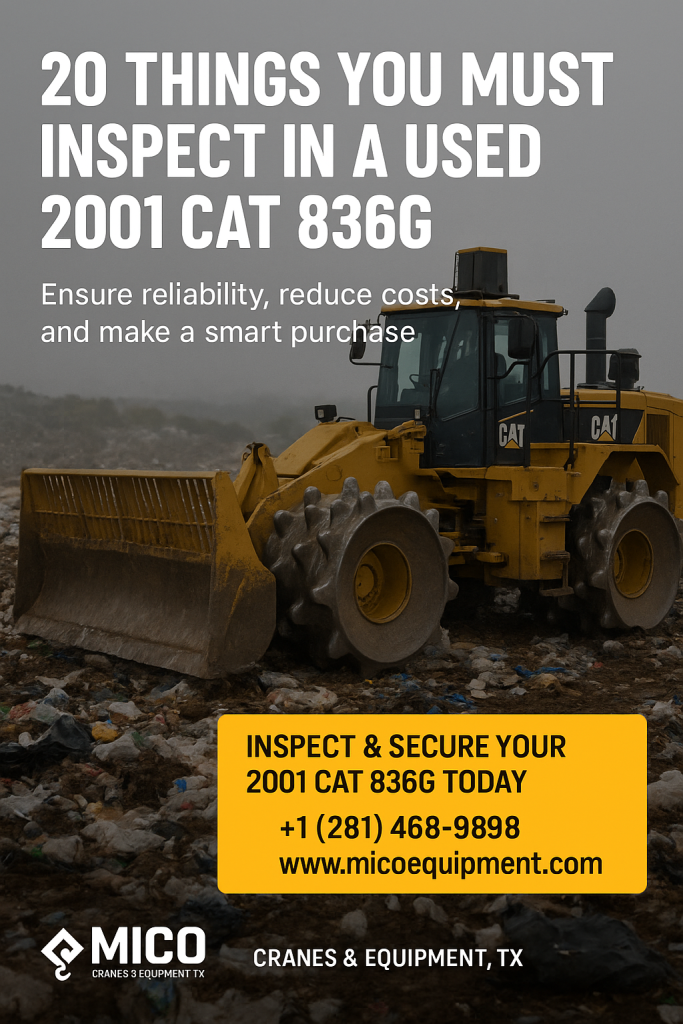
20 Critical Inspection Points to Purchase 836G
If you ignore the proper evaluation of the engine, hydraulic, transmission, and structural integrity, you will be at risk. It will cost you slow machine response and malfunctioning. However, significant errors are hidden and cannot be detected during a quick walk-around inspection. Join us to understand the simple, alarming signs that indicate future costly repairs.
- Powertrain and Engine
In fact, for challenging landfill sites, machines should have powerful engines to withstand extended operational time on harsh terrain. It is a myth that used equipment for sale has compromised functionalities. A well-maintained and rebuilt CAT 836G provides similar raw power and high torque, delivering uniform compaction.
- Engine Blow-By Levels
The average blowby limit for a diesel engine is around 1.5-3 CFM. If the previously owned CAT landfill compactor has signs of excessive blow-by from the breather tube. It is directed towards damaged piston rings or cylinder wear. High blow-by indicated significant engine overhauling in the G-series compactor.
- Turbocharger Condition
Check the condition of the turbocharger. If you observe signs of excessive play, oil leakages, or weird sounds, it will halt the compactor’s performance under heavy loads. Moreover, it can lead to contaminating the fuel combustion chamber, which accelerates engine wear
- Fuel System Pressure
Evaluate the structural strength of fueling pipes, pumps, and injectors for cracks or splits. If the used 2001 CAT 836G landfill compactor for sale takes a while to start, it’s because the fuel pressure is low. When the throttle produces massive smoke or sluggish movements, it signals injector problems.
- Cooling System Integrity
At waste management sites, the surrounding temperatures are too high, and the machine has to perform heavy operations. Here, the chances of the compactor overheating are higher, so carefully inspect the cooling system at the time of purchase. The radiator and connected parts should be free of clogging and rusting.
- Transmission Shift and Clutch Engagement
Planetary Powershift of 836G’s is reliable to distribute power equally. Note that there is a smooth gear change without any jerky movement. Delayed response or vibration in the gear joystick is due to hidden issues in the internal transmission or damaged clutch packs.
- Hydraulics and Steering
Reliable hydraulic systems provide precise blade movement and an even compaction pattern. CAT 836G hydraulic pumps use a variable-displacement piston to maintain steady pressure, delivering 79 gpm at 2000 rpm.
- Hydraulic Pump Performance
Take a test drive and inspect the hydraulic system under load to ensure consistent pressure. If the hydraulic pump is weak or there are leaks in the connected hose, the compactor will overheat quickly and take too long to complete a cycle, with whining noises.
- Cylinder Seals and Rod Scoring
Oil leaks around the hydraulic cylinder seal, or pitting or scoring of rods, will result in costly downtime and improper outputs. Faulty rods can damage the new seals, affect fluid pressure, and cause machine failure.
- Steering Response and Drift
If you experience drift or lose control of the landfill compactor’s wheel steering, it indicates previous poor handling and poor servicing practices. Heavy-duty hydraulic steering should be smooth and highly responsive; if not, it means the unit has issues with the steering cylinders or damage to the internal valve.
- Compaction and Structural Components
CAT structures the 836G with a reinforced steel frame with a single weld point for maximum strength to tolerate mechanical stresses. Wheel tips are replaceable for stable movement over wet, slippery waste materials.
- Wheel Tips and Compaction Cleats
Examine the physical condition of the compaction drum and missing or broken wheel tips. Rounder tips lose penetration, power, and impact compaction density. You may need repeated passes to achieve the same results, which increases fuel consumption and operational expenses.
- Frame Articulation Pins
To navigate over uneven landfill sites, the chassis and articulated hinge points of the 2001 CAT 836G should be flexible and properly greased. Excessive wearing of pins or bearings is the sign of overuse and structural fatigue that will result in expensive rebuilds.
- Blade Structures and Weld Cracks
Inspect the blade edges and deflector bar for weld repairs or metal fatigue. The structural strength of the machine is essential for heavy-duty load pushing and pulling on dumping sites. Weak parts can create occupational hazards and compromise operational site safety.
- Hitch and Equalizer Bar
Look for mechanical stress and dents over the hitch bushings and equalizer bar. If you notice grinding noises while moving the machine, it signals future rebuilding costs.
- Drivetrain and Undercarriage-Equivalent Parts
For consistent compaction performance, a stable operating weight with equal distribution over all parts is essential. Carefully inspect the undercarriage parts and power transmission system.
- Axle Leaks and Planetary Drives
Inspect the signs of oil leakages over the seals and hubs of the front and rear axles. The gear exchange should be swift and without abnormal sounds. If you smell an oil-burning odor due to rusting or damage to internal parts, it is a warning sign.
- Differential Lock Function
Evaluate the smooth working of the differential lock under load. It should smoothly engage and disengage for reliable movements. A faulty diff-lock and deteriorated hydraulic system impact the pushing strength over slopy terrains
- Brake System Performance
While using brakes, check the warning lights, pedal response, and equal control over all wheels. Loss of brake pedal feel is due to worn brake discs or an accumulator malfunction. Previously owned CAT landfill compactors for sale need major rebuilding after 15-20 years of use.
- Electrical and Control Systems
This old landfill compactor model has simple mechanics and electronic controls that are perfect for handling the dusty conditions of waste management facilities. However, to ensure your purchase is safe and to maximize ROI, verify its accuracy.
- Monitor Panel Error Codes (ECM readout)
Use advanced diagnostic tools to extract the previously logged ECM codes. This data will enable you to identify hidden issues in the powertrain and hydraulic systems.
- Wiring Insulation Damage
The corrosive working conditions in landfills severely impact electronic systems, as they erode wiring, damage insulation, and cause loose connections. The faulty sensors and connectors can suddenly shut down the machine.
- Battery Load Performance
Start the compactor and test all lights, indicators, and warning signals to ensure that the battery is providing proper voltage. A weak battery is a warning sign of deeper issues.
- Operator Station and Safety
For operator comfort, the cab interior should be safe and withstand challenging operating conditions. Operator safety and ease of use are key factors in achieving optimal productivity.
- Cab Visibility and HVAC
Check the sealing of cab doors, windows, and rear-view mirrors. The proper function of air conditioning and accurate control of dashboard buttons are essential for safe driving.
- Safety Features
Verify the reliability of seat adjustments, fire suppression feature, working lights, and backup alarm. The ROPS structure should be in excellent and genuine condition. Inspect the cylinders and connected pipes of the fire suppression system.
Additional Smart Checks Buyers Overlook
Indeed, some issues are not detectable with general observation. Here comes the role of a well-documented record of previous maintenance and repair history. Ask the dealer to provide complete service logs and primary details on replacement or retrofitting.
Maintenance Documentation
Request the regular service log for engine and hydraulic rebuilds. The CAT suggested that SOS oil sampling results are essential to evaluate the overall condition of the machine. The organized data and records indicate careful handling of the compactor and its future reliability.
Hour Meter Accuracy Signs
If the machine’s external condition is opposite the hour meter reading, leave that deal. Like the usage time is less, but the machine parts show excessive use with some signs of repair. It could be due to bad handling practices or tampering with meter readings.
Telemetry Data (if retrofitted)
Some users retrofitted their 836G units to support Cat Product Link for remote monitoring of the machine performance. Evaluate the telematics data to understand its past utilization and previous fault history.
Signs of Corrosion
The acidic leachate from landfills severely corrodes chassis, guards, wheels, and undercarriage. If the lid of the fuel tank is rusted, dents on the belly pans, and the wheel tips are missing. These are the signs of poor cleaning and preventive maintenance.
Professional Inspection Tools Experts Use
Professional inspectors don’t rely solely on assumptions. They use smart, precise tools to assess the actual condition of second-hand CAT 836G for sale on open markets. These evaluations require specialized equipment to deliver a credible assessment.
- Infrared Temperature Gun
The heat-changing sensor of this gun detects minor cracks and leaks in hydraulic lines, engine parts, axles, and final drives. Experts rely on its readings to evaluate internal wear, improper lubrication, or future expected system failures.
- Hydraulic Pressure Gauge
It is effective to verify the hydraulic pumps’ power and valve performance. The weak hydraulic controls impact the overall compaction strength of 836G.
- Engine Compression Tester
Reliable engine support is necessary for high-hour G-series machines. This instrument inspects the condition of the fuel combustion cylinder and injector. In fact, the halted cylinder pressure is due to damaged rings and valves.
- ECM Diagnostic Software
This system provides an accurate operating history of the Electronic Control Module (ECM) and decodes expected faults. It compiles past data on malfunctioning, usage time, and sensor issues.
- Oil Sampling Kits (CAT S·O·S Program)
Fluid analysis of the used 2001 CAT 836G landfill compactor detected contamination of metals due to wear of internal parts. Fuel dilution error, which is a cause of damage in the separator and fuel tank. The oil sampling and testing identify early-stage component wear.
Some Red Flags to Leave That Used 836G Unit
Not every used 836G purchase is a cost-effective and reliable decision. If you invest in a unit with hidden flaws, you will end up with costly repairs and extensive downtime. Here, we have compiled some of the most critical warning signs that should never be ignored:
- Weird sounds, such as knocking and grinding from the engine and transmission, will cost major rebuilds.
- Overheating of the machine requires too expensive hydraulic repairs.
- High-hour units with more than 20,000 hours are not worth buying without a CAT-certified rebuild history.
- Structural concerns are another solid reason to walk away; they will compromise safety and productivity.
Always select the previously owned equipment with a clearer exterior and reliable system functionality for better ROI and operational safety.
Expert Tips to Maximize ROI After Purchase
Once you purchase a previously owned 2001 CAT 836 G unit, conduct some safety measures to secure your investment and reduce the need for future repairs.
Immediate Servicing
Thoroughly clean the compactor, replace the engine oil and filters. Lubricate the pivot points and refill the hydraulic fluid as recommended by CAT. These starter maintenance practices give it a new phase of operation.
First 250-Hour Maintenance Plan
After performing 250 hours of operations, conduct SOS sampling and testing to verify the well-being of major systems. Calibrate the compactor wheel tips and adjust the valve settings according to your job site requirements.
Productivity and Fuel Optimization
Train your staff to safely handle the compactor and inspect it before starting operations. These measures will control fuel efficiency and extend machine lifespan. Pre-decide the compaction pattern and routes to reduce the chances of mechanical stress on vital parts.
Find a CAT Landfill Compactor for Sale Near Me
A strategic approach is required to carefully and reliably inspect the used 2001 CAT 836G. Always contact well-reputed dealers or second-hand machinery suppliers to have a secure unit with transparent dealings. Mico Cranes and Equipment, TX, offers a well-maintained CAT 836G landfill compactor with a comprehensive service history.
FAQs
Q1: Is a 2001 CAT 836G still effective to handle challenging landfill compaction?
Yes, this CAT purpose-built machine is designed to perform in harsh conditions and has a long service life. Moreover, Mico Cranes and Equipment provide you with 836G, which has recently been rebuilt for its engine, hydraulic, and transmission systems to deliver optimal productivity and minimal downtime.
Q2: What is the average lifespan of 836G?
According to the CAT-provided statistics, it can remain active for 12,000 to 25,000 hours. However, after major repairs and updates, it will perform like a brand-new model. CAT products are the most durable, heavy-duty machines with long service life and easy access to spare parts.
Q3: What is the cost to rebuild the 836G engine or transmission system?
Repairing expenses vary with the severity of the issue, the parts used, labor costs, and the machine’s condition. Frequently, engine and transmission retrofits or repairs require considerable investment.
Q4: What attachments are compatible with this 2001 CAT 836G landfill compactor?
The waste management fleet upgrades its compactors with cleats, dozer blades, rear deflector bars, and dust-controlling guards.