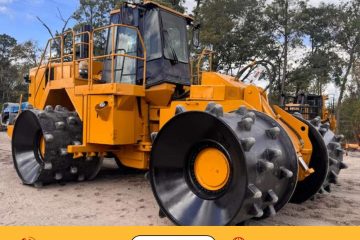
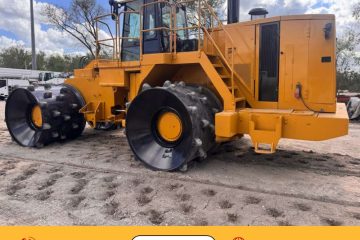
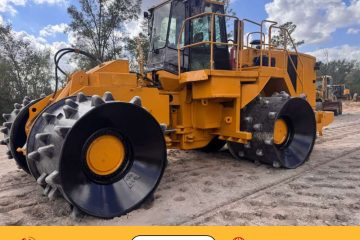
2001 Caterpillar 836G Landfill Compactor for Sale

For landfill operations, you always require reliable machines that can handle challenging situations. Purchase a 2001 CAT 836G landfill compactor for sale to meet high productivity targets of ground compaction, safety, and cost efficiency. The 836G is engineered with a rugged design and long service life.
Mico Cranes and Equipment, TX, offers you the CAT 836G compactor with a CAT-certified powertrain rebuild (June 2012) and a well-maintained record. You will have a landfill compactor with factory-level reliability and Caterpillar’s strict rebuilding standards. It is available in ready-to-work condition with an upgraded engine, transmission, hydraulics, and cooling systems.
Overview of Our 2001 CAT 836G
CAT products are always reliable for their durable designs and low maintenance requirements. The most appealing selling point of this 836G is its complete rebuild by certified CAT technicians. It is available with a well-documented service history that extends its operating life and ensures outstanding performance.
- Enclosed Cab with A/C and Heat
The cab of this landfill compactor is sealed and climate-controlled for comfortable, long-shift operations in harsh conditions.
- Wedge-Foot Drums (Front: 55” / Rear: 55”)
The heavy-duty compaction drums effectively manage the landfill cell compaction by maximizing airspace. It provides deeper penetrations and ground pressure even in a single pass.
- 213” Blade
For uniform grading of trash material, its rugged blade pushes, spreads, and manages dense debris.
- Landfill Guarding System
The CAT 836G compactor was fortified with purpose-built landfill guarding protections. The guards over the engine, cooling system, axle, and belly pan are secured from dust and corrosive materials.
- CAT-Certified Component Service History
In used construction equipment for sale, CAT machines are in high demand for their easy access to spare parts and worldwide customer support. With a major CAT-certified rebuild, this unit is perfect to handle landfills’ intense working conditions.
| Major Upgrades | Time | Features |
| Powertrain Rebuild | June 2012 @ 18,780 Hours | Refurbishing the powertrain system with CAT genuine parts and dealer-certified procedures reduced the risk of unexpected downtime. |
| Engine Updates | 2023–2024 | To improve fuel efficiency and engine health, the Turbo and Cylinder head are replaced. Ensure idle time management and auto-diagnostics systems. A powerful engine is essential for long-hour landfill compaction. |
| Transmission Repairs | Nov 2020 @ 32,458 Hours | A fully resealed and repaired transmission gives you drivetrain reliability and consistent heavy pushing and compaction work without the risk of leakages. |
| Hydraulics Maintenance | For responsive blade control and proper hydraulic pressure, we replace the weak hose and readjust the blade valve. A reliable leak-free hydraulic system is essential for landfill compactor performance. | |
| Cooling System Upgrades | 2017–2024 | The working conditions of landfills are too harsh, with high ambient temperatures. For the secure cooling system of this 836G, we installed a new compressor, hoses, relays, and dryer. |
| Electrical Improvements | For operational dependability, CAT-certified personnel perform wiring replacements and add new fuses, breakers, and connectors. | |
| New Paint | Nov 2025 | In a highly abrasive landfill environment, fresh paint protects the compactor’s structural components from corrosion and degradation. |

Technical Specifications and Features of CAT 836G Landfill Compactor
In landfill operations, fleet managers require compactors with outstanding power for extended compaction and an effective operating weight for stability. The used 2001 CAT 836G landfill compactor for sale is a reliable and cost-effective option. It provides high compaction density, operator comfort, and operational uptime.
| Specifications | Features |
| Engine Model | Cat C18 |
| Gross Power | 562 hp (419 kW) |
| Rated Engine Speed | 1,900 rpm |
| Peak Torque | 2,275 lbf·ft at 1,400 rpm |
| Operating Weight | 124,063 lb |
| Transmission Type | Planetary Powershift (ECPC) |
| Travel Speeds | 7 km/h to 13.2 km/h |
| Hydraulic Pump | Variable-displacement piston |
| Hydraulic Flow Rate | At 2000 rpm, it reaches 79 gpm |
| Fuel Tank Capacity | 209 US gal |
| Drum Type | Wedge-foot or Padfoot drums |
| Wheels | Spaded/cleated wheels |
| Guard System | For engine, transmission, cooling, and belly pan |
- Heavy-Duty Compaction Power
The 836G offers exceptional ground pressure for precise compaction of waste debris. It has a reinforced chassis and specialized wheel structure. The perfect blend of high machine operating weight and the compaction drum provides landfill cell development without air voids.
The traction stability makes it effective on wet, fibrous-rich trash, where the risk of machine slip is high. With powerful compaction, even in a single pass, improve dumping cell capacity and lower operating cost.
- Steel-Resistant Compaction Wheels
The landfill compactors are exposed to highly corrosive chemicals and sharp metallic scales. CAT integrates replaceable wheel tips in the G-series for deep penetration and reliable aggregate breakdown.
Moreover, different wheel configurations improve traction on steep slopes and control operational site safety and productivity. Used CAT landfill compactors for sale offer lower maintenance costs than many competitors.
- Reliable CAT 3406E Engine
A durable, long-lasting CAT 3406E engine powers the 2001 model compactor. It can deliver optimal torque for heavy-duty pushing and pulling. Remarkably, the simple mechanical-electronic setup reduces the chances of malfunctioning.
CAT 836G can perform continuous 12–16-hour landfill operations without overheating. This powertrain system with high uptime is critically essential for 24/7 waste management facilities.
- Built for Harsh Environments
The 836G’s is the most powerful design in the heavy-duty compactor category. The CAT features a reinforced, shock-absorbing frame for navigating uneven surfaces. Moreover, secure protection for shields and guards over the hydraulics, radiator, and belly pan reduces premature degradation.
A high-efficiency, enclosed cooling system enables keeping compact and safe in debris-rich landfill surroundings.
- Operator-Centered Cab Design
Caterpillar prioritized comfort and safety in its product line. 2001 CAT 836G has closed, a climate-controlled cab with considerable elevation for clear views of the working area. The adjustable seat with air-cushion technology reduces vibration, and ergonomic controls minimize operator fatigue.
G-series landfill compactors are compatible with remote assistance technologies for safe operations and higher operator productivity.
- Superior Traction and Stability
For precise traction on steep, slippery landfill faces, the 836G features wide compaction wheels. With replaceable wheel tip configurations and an optimized machine weight distribution, it can evenly spread heavy loads. You can operate more safely and confidently with reduced risk of machine rollbacks.
- Simplified Maintenance
The simple design of the 836G, with low ground-level service points, makes regular maintenance effortless. Moreover, the durable driveline components and CAT’s robust parts availability reduce the operational expenses.
Extended machine life under heavy cycling gives better return on investment compared to other brands’ landfill compactors.
Comparative Analysis of CAT 836G With Other Compactors
We provide a comparative analysis of the CAT 836G features with other market-available options (newer CAT 836H/K and Bomag compactors) to streamline your purchase. Here, we discuss the landfill compactor’s features that are more important for waste management facilities.
| Attribute | 2001 CAT 836G | Newer CAT 836H / 836K | Bomag Landfill Compactors |
| Compaction Performance | Impactful wheel design for high ground pressure on mixed waste. It is effective for highly fibrous and wet waste. | Slightly improved features with a high initial cost. | Very dense materials, but stuck for highly variable wastes. |
| Wheel and Tip Design | Powerful heavy-duty wheels with exchangeable tips for different conditions. | Improved wheel packages for longer wear life. | Durable wheel designs, but options for tips are limited. |
| Engine Reliability | The CAT 3406E engine has less fuel consumption and high torque. Simple and easily serviced by local technicians. | Better fuel performance, but complicated electronics | Service network support varies by country. |
| Durability | Built heavy with a reinforced chassis and guarding to excel in landfill conditions. | Durable when enhanced with some design features. | Generally durable, but for landfills, they need upgrades in the radiator and guards. |
| Operator Comfort | Good cab ergonomics can reduce operator fatigue. | Improved ergonomics and control. | Cab comfort is competitive. |
| Fuel Efficiency | Simple mechanical features reduce operating surprises. | Better fuel economy but higher repair costs. | Competitive fuel efficiency and fewer local parts and service availability. |
| Maintenance | Excellent serviceability, with a simple design and easy access to parts. | Improved diagnostics features, but high repair costs for complex electronics. | Serviceable, but parts and repair access are complicated and complex. |
| Uptime | High productivity with lower acquisition cost. Good option for short-to-mid-term TCO. | Higher yield, but high cost and TOC due to its complex features. | TCO is competitive, but access to dealer support is limited. |
| Resale Value | Good resale value with special wheel, engine, and transmission for landfill conditions. | Higher initial cost that depreciates sharply. | Resale only in countries where Bomag parts are available. |

The previously owned 2001 CAT 836G is the smartest purchase if you need high-performance compaction at a low acquisition cost with minimal maintenance needs. This model is most preferred forlandfill operators who value predictable uptime with easy access to repair and spare parts.
If your prime focus is emissions compliance, invest in the advanced 836H/K landfill compactor, available at hefty price tags and with complex electronics. Second-hand heavy-duty equipment for sale is a cost-effective way to achieve high productivity and durable, tested models.
Real-World Applications of CAT 836G
The 2001 CAT 836G Landfill Compactor is a built-in model for powerful compaction of landfill cells and waste handling for municipal authorities. Its durable structure and balanced compaction power enable it to handle large-scale, challenging operations. Here, we mention its common uses:
- Municipal Solid Waste (MSW) Landfills
To manage large municipal landfills, experts used a CAT 836G to compact waste and create compact cells that cover less space and improve composting. With superior consolidation of trash, air spaces are removed, forming dense waste cells that reduce volume. Proper waste management extends the lifespan of landfill sites and maintains safe working surfaces.
- Cell Construction and Waste Cover
The 836G is compatible with a range of blade sizes to evenly spread and contour landfill sites. These compactors effectively spread soil or alternative cover over waste materials.
- Waste Slope Management
The machine’s optimal operating weight and wide compaction wheels provide maximum stability on wet, slippery landfill faces. A fleet manager can stabilize the dumping site’s working edges and create temporary access ramps.
- Compaction of Construction and Demolition Waste
The 836G’s high ground pressure is adequate to compress and break down demolition waste of concrete, metals, or wood. The operators can compact the aggregates into a uniform, dense layer of material with no voids.
- Handling Industrial and Commercial Waste
Many municipal recycling facilities receive heavy-duty industrial waste streams. This CAT landfill compactor can process dense manufacturing byproducts and commercial refuse. It has a steel-reinforced chassis and a powerful drivetrain to handle abrasive materials.
- Specialty Waste Operations
Green waste compaction requires 836G for crushing unwanted vegetation and organic materials. Similarly, it can be deployed at tire disposal sites to process alternative daily cover (ADC) and disperse inert waste. Its spiky wheels can crush fibrous or elastic materials easily.
Attachments and Modifications Compatible with CAT 836G
CAT landfill compactors are designed for handling intensive and long-hour waste compaction. This model is highly adaptable to various modifications and attachments, tailored to different landfill conditions. Here are some compatible add-on options for the 836G.
| Attachment or Modification | Type and purpose |
| Wheel Tip Configurations | • Paddle tips: For lighter compaction operations with stable tractions and fuel efficiency. • Plus tips: When working over uneven and sloppy surfaces, it provides stable moves. • Diamond or combination tips: For more challenging landfill operations, they offer high yield and machine longevity. |
| Bulldozer-Style Blades | With compaction drum S, U, and Semi-U blades can be mounted for pushing, grading, and spreading waste materials. Now it can operate in dual mode to manage a uniform layer of trash and compact it effectively. |
| Wheel Cleaner Bars | In landfill operations, plastic bags or debris can accumulate over the wheels. This CAT 836G is upgraded with cleaner bars/striker bars to improve stability and reduce the risk of hazards. |
| Protective Guards and Reinforcement | Landfills are among the harshest working environments and require secure guarding and protection systems for axles, transmissions, cooling systems, and cabs. |
| Compaction Monitoring | CAT 836 compactors are compatible with compaction-tracking technologies for precise thickness control, fuel management, and reduced rework. GPS trackers manage pass count, compaction penetration, and idle time. |
| Hydraulic, Engine, and Cooling System Upgrades | Based on job site conditions and the nature of waste materials, fleet managers enhance the cooling, filtration, and hydraulic systems of landfill compactors. |
Practical Compatibility Notes
Indeed, different attachments can improve its compactor performance in specific waste streams and enhance operational versatility. As 2001 CAT 836G is an old model and has some restrictions and challenges, such as:
- To upgrade to GNSS-based mapping, the 836G’s electronic system needs some wiring, sensor, or actuator control retrofitting.
- Select the wheel tip based on careful evaluation of site conditions; otherwise, an incorrect tip type can damage the machine and create occupational hazards.
- Regular inspection of guards and cooling systems is necessary to enhance the usefulness of the attached wheel or blade.
- Always hire a CAT-certified technician for retrofitting or customizing to have structural integrity and safe operations.
CAT 836G Best Handling Practices to Maximize ROI
The best handling and safe operational guidance are essential to have optimal productivity. Even a brand-new machine can’t deliver maximum returns if not operated properly. Stay with us for professional tips to achieve the highest return on investment with the CAT 836G landfill compactor.
- Proper Compaction Pass Pattern
Before starting operations, plan the systematic working route commonly from “front-to-back, overlapping lane.” Random passes are not effective for high-density compaction. To achieve uniform layers and deep penetration, set the lift thickness to 12–24 inches. Follow compaction in a layered pattern and refine with a final smoothing pass.
Dense waste layer=less air voids=Improve landfill capacity
- Right Wheel Tip Type
Select the best match of wheel tip between paddle, plus, or diamond tip that gives stable results for specific landfill conditions. Inspect the tip condition after each shift to reduce the risk of unexpected downtime. Daily, clean the chassis, striker bars, and axles to remove accumulated debris. A suitable wheel tip provides uniform compaction and reduces unnecessary fuel consumption.
- Master Blade and Waste-Handling Control
Blade-use techniques are essential for optimal performance. Always use blades to push and pull lightweight materials, keeping the load centered. Avoid sudden throwing of the blade over a hard surface, as it can damage the edges.

- Manage Travel Speed, Slope, and Direction
Landfill compactors are designed to work at low speeds to produce high torque. CAT 836G is not required for overspeed, sharp turns, and sudden stops. When working on steep slopes, move the compactor up and down, not side to side. Lower strain on powertrain controls the chances of downtime.
- Protect Cooling Systems and Airflow
The 836G is designed to operate in a heavy-debris landfill site with high ambient temperatures. It is recommended to thoroughly clean the chassis, wheels, radiators, and reversing fan after completing operations. Inspect the air vent, radiator fan, and cooling system to remove accumulated materials. Regular servicing and cleaning improve engine and hydraulic life.
- Regular Under-Guard Cleaning
In compactors, the most vulnerable parts are the undercarriage and chassis, which come into direct contact with corrosive materials. Make a daily routine to clean the CAT 836G after completing compaction operations. The lifespan of second-hand landfill compactors for sale can be extended with regular, organized maintenance. These practices reduce the chances of overheating and machine failures.
- Monitor Fuel Efficiency
Control idle time and shut down the machine during long wait times to optimize fuel consumption. Operate the compactor continuously within the recommended RPM range to avoid unnecessary stress on the engine and powertrain. Inspect tire pressure to ensure uniform performance and the fastest operational ROI.
- Preventive Maintenance Routines
Follow the Cat recommended servicing practices for engine oil, hydraulic fluid, and coolant replacements. Grease the moving parts to maintain structural integrity and prevent premature wear. Install a pre-calibrated software system to monitor machine performance, record data, and support data-driven decision-making. In fact, a well-maintained CAT 836G can perform effectively for 20,000–30,000 operational hours.
Professional Tips for Buying a Used Landfill Compactor
Selecting the previously owned landfill compactors is a cost-effective and secure choice if carefully examined at the time of purchase. Here are some practical tips to choose a reliable unit.
- Check Rebuild Authenticity
Always select machines that undergo CAT-certified retrofitting and repairs using manufacturer-provided genuine parts. Carefully review the previous maintenance and service records for the engine, transmission, hydraulics, and cooling system upgrades.
- Inspect Engine Under Load
Take a test drive and check the engine’s power under fully loaded conditions. Monitor the weird sounds while the compactor is turning and moving the drum and blade. There should be no turbo lag and a smooth blade throttle. Check traction stability when driving over inclined areas.
- Evaluate Smooth Transmission
Landfill slopes are challenging for machines with a weak transmission system. Check the surging or slipping under heavy push and smooth gear change.
- Check Drums and Compaction Feet
Wedge-foot strength and flawless finish determine compaction efficiency. Examine the unexpected wear patterns on the drum and wheel, which indicate poor handling practices by the previous user. The drum foot height should be consistent with no structural cracks
- Inspect Hydraulic Response
The power of hydraulics is determined by the smooth tilting and lifting of the blade without any drift. There should be no extra noise from hydraulic pumps. Warm the CAT 836G landfill compactor and verify the operations at the company-suggested RPM.
- Examine Landfill Guarding
A good landfill compactor requires precise guarding and protection against dust and abrasive materials. Carefully check the condition of the radiator guards, engine shields, and debris deflectors, as broken guards require expensive future repairs.
- Inspect Electrical System Performance
Harsh landfill sites require reliable machines with secure wiring and connectors to achieve high yields. A well-maintained ECM upgrade means lower downtime.
Used CAT 836G for Sale Near Me
A landfill compactor is a durable machine for developing massive landfill cells, with the reliability to operate for extended hours. Mico Cranes and Equipment, TX, provides a 2001 CAT 836G for sale in Houston that has been recently upgraded with CAT-certified procedures for the engine, hydraulics, and transmission. Contact us for a ready-to-work compactor with transparent and well-documented service history.
FAQ
Q 1. How many meter hours are acceptable when buying a used CAT 836G?
If the CAT 836G is well-maintained and follows safe handling practices, it can perform reliably after 25,000–30,000 hours of service. The landfill compactor is in poor condition, as indicated by its lagged hydraulic response and excessive engine smoke.
Q 2. What does a CAT Certified repair and replacement mean?
CAT-certified rebuild or repairs mean that the technician follows the CAT-defined procedures for repair and uses genuine CAT spare parts in replacements. These practices deliver near-new specifications even for a decade-old unit.